
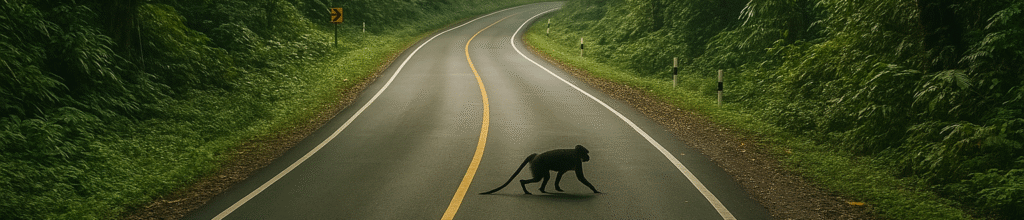
1. Assessing the Impact of Roads on Wildlife in Indonesia
Rapid urbanization in Indonesia has led to an expanding network of roads and a significant increase in vehicular traffic across both urban and rural regions. While road infrastructure supports economic growth and connectivity, it also poses severe and lasting threats to ecosystems and biodiversity. Roads fragment natural habitats, create physical barriers that restrict gene flow between wildlife populations, and introduce edge effects that alter ecological balance. Most critically, they contribute to direct mortality through vehicle collisions and indirectly affect species behaviour and population structure.
These impacts are particularly concerning for many terrestrial and slow-moving species that are drawn to roads for warmth or access to resources. Beyond individual deaths, road networks can influence population dynamics by skewing sex ratios, reducing genetic diversity, and disrupting vital natural behaviours such as migration, foraging, and breeding.
In Indonesia — a megadiverse country with exceptionally high endemism — roads are likely to have profound impacts on native wildlife. Understanding these effects is essential for developing effective mitigation measures that balance infrastructure development with biodiversity conservation.
Objectives
To identify diurnal and seasonal road mortality hotspots across key ecosystems.
To determine the species, sexes, and life stages of wildlife most frequently affected by vehicular collisions.
To estimate overall wildlife mortality rates and extrapolate these findings to regional scales, considering factors such as traffic volume, road density, and habitat type.
The outcomes of this study will provide evidence-based insights to inform conservation planning, guide wildlife-sensitive road designs, and promote national infrastructure policies that integrate ecological sustainability. By identifying where and when road-related threats are most severe, this research will help protect Indonesia’s rich biodiversity and maintain the ecological connectivity essential for long-term wildlife survival.
Project Supervisor(s): Dr. Tharusha Wijewardena / Dr. Sandy Nurvianto / Dr. Namrata Anirudh
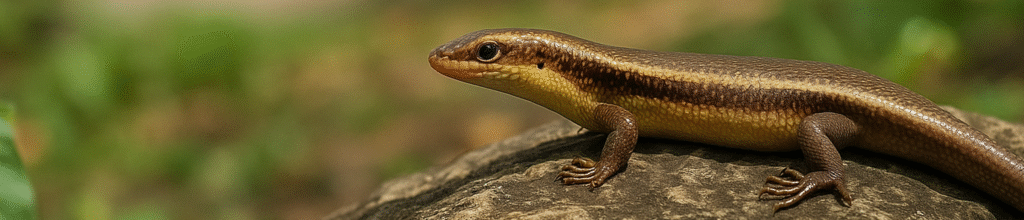
2. Ecology and Relative Abundance of Sun Skinks (Eutropis spp.)
Indonesia hosts more than 800 species of reptiles, including at least five species of sun skinks in the genus Eutropis. These small, agile lizards play a crucial ecological role—serving both as predators of invertebrates and as prey for larger vertebrates. Despite their wide distribution across natural, rural, and urban environments, the ecological functions and population dynamics of Eutropis species in urban landscapes remain poorly understood.
Urbanization is rapidly transforming habitats across Indonesia, altering community structure and species interactions. Although Eutropis species share similar evolutionary origins, their presence and abundance in urban ecosystems are not uniform. Previous studies have focused on their phylogenetics and evolutionary relationships, but little is known about their population structure, sex ratios, or habitat preferences in human-modified environments.
This study seeks to fill these gaps by investigating how Eutropis species respond to urbanization and identifying the ecological traits that facilitate their persistence in disturbed habitats.
Objectives
Estimate the relative abundance, sex ratio, and size-class distribution of Eutropis species using pitfall traps.
Document key habitat features associated with different Eutropis species across urban gradients.
By comparing the distribution and demographic patterns of multiple Eutropis species, this research will provide valuable insights into the mechanisms that promote resilience and adaptability in urban wildlife. The findings will contribute to understanding how reptile communities respond to environmental change and urban expansion in Indonesia.
Project Supervisor(s): Dr. Tharusha Wijewardena / Dr. A.A. Thasun
3. Impact of Relocation on Home Range and Movement Patterns of Wildlife
Relocation is a common wildlife management and conservation practice used to mitigate human–wildlife conflict, restore populations, or control species distribution. However, the ecological consequences of relocation on animal movement, survival, and adaptation are often poorly understood. Relocated individuals may experience stress, altered behavior, or reduced site fidelity, which can influence their ability to establish new home ranges and integrate into unfamiliar environments.
Previous studies have shown that relocation can significantly affect movement dynamics, with variations in dispersal distance, activity patterns, and habitat use among species and between sexes. Yet, detailed investigations into how relocation impacts home range size and spatial behavior within native habitats remain limited. Understanding these effects is essential for refining translocation protocols and ensuring that management interventions minimize ecological risks while enhancing the success of conservation outcomes.
Objectives
Quantify the home range size and displacement rate of relocated wildlife species in their native habitats.
Compare dispersal capabilities and movement patterns between sexes to evaluate behavioral differences influencing relocation success.
This study will contribute to a better understanding of the spatial ecology of relocated wildlife populations, providing data-driven insights to improve relocation strategies, enhance post-release monitoring, and support evidence-based conservation planning.
Project Supervisor(s): Dr. Tharusha Wijewardena / Dr. Sandy Nurvianto / Dr. Namrata Anirudh
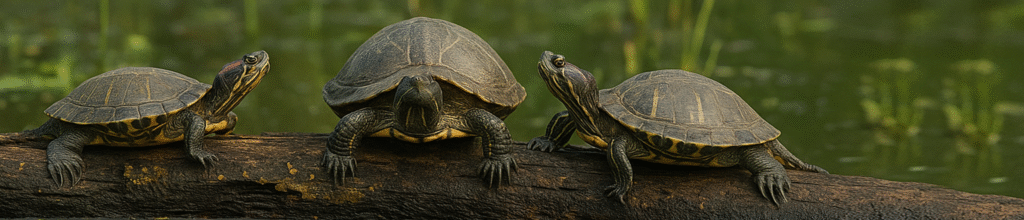
1. Invasive Turtle Species in Indonesia – Distribution, Impacts, and Management
Invasive species represent one of the fastest-growing threats to global biodiversity, often disrupting ecosystems, displacing native species, and altering ecological balance. When introduced into new environments, invasive species frequently outcompete native fauna due to the absence of natural predators, parasites, or competitors. Their spread may occur unintentionally through trade and transportation, or intentionally via pet releases and human-mediated introductions.
Freshwater turtles are particularly vulnerable to these dynamics. Popular in the global pet trade, many non-native turtle species have been released into the wild, where they can establish self-sustaining populations.
Indonesia, a recognized biodiversity hotspot with numerous endemic and ecologically sensitive turtle species, faces an emerging challenge from invasive turtles. These non-native species can compete with native turtles for food and nesting sites, degrade aquatic habitats, and introduce novel pathogens that threaten local wildlife. Reports and community-science observations have confirmed the presence of invasive turtles in several regions of Indonesia, yet their full distribution, ecological impact, and potential management options remain poorly documented.
Once established, invasive species are extremely difficult and costly to eradicate. Early detection, rapid response, and proactive management are therefore essential to limit their spread and mitigate their ecological consequences.
Objectives
Identify invasive turtle species, map their distribution, and examine key pathways of introduction into the wild.
Review existing policies, strategies, and management practices aimed at controlling the spread of invasive species.
Assess community awareness and knowledge of invasive species, and implement outreach programs to address identified knowledge gaps.
By integrating ecological field research with policy review and community engagement, this study will lay the groundwork for an effective national strategy to manage invasive turtles in Indonesia. The outcomes will not only aid the conservation of native turtle species but also strengthen broader aquatic biodiversity management and invasive species prevention frameworks.
Project Supervisor(s): Dr. Tharusha Wijewardena / Dr. A.A. Thasun
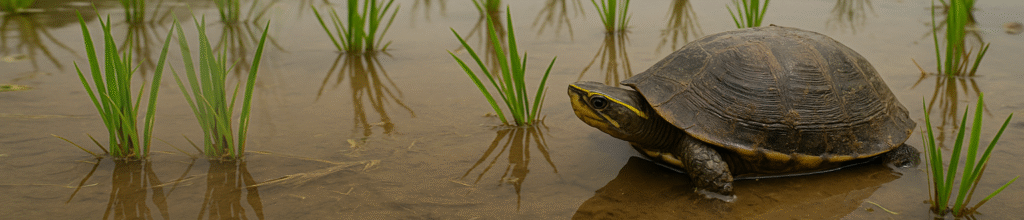
2. Spatial Ecology of the Southeast Asian Box Turtle (Cuora amboinensis) in Natural and Peri-Urban Landscapes of Indonesia
Indonesia supports several species of freshwater turtles and tortoises, many of which are listed as endangered by the International Union for Conservation of Nature (IUCN) due to severe threats such as habitat loss, overexploitation, and poaching. Although Cuora amboinensis (the Southeast Asian Box Turtle) is one of the most frequently traded turtle species in Southeast Asia, fundamental information on its ecology, behavior, and spatial use remains limited.
Cuora amboinensis is a semi-aquatic species comprising four recognized subspecies—C. a. amboinensis, C. a. couro, C. a. kamaroma, and C. a. lineata—found across a range of habitats from pristine wetlands to heavily modified landscapes. Recent evidence suggests that paddy fields, drainage canals, and oil palm plantations can serve as secondary habitats for this species, potentially increasing its exposure to human disturbance and poaching.
This study aims to assess the spatial ecology of Cuora amboinensis in both natural and peri-urban areas to determine how well this species adapts to human-altered environments. Using radio telemetry and real-time GPS tracking, the research will examine diurnal and seasonal movement patterns, habitat preferences, and spatial overlap among individuals.
Objectives
Identify and validate subspecies of Cuora amboinensis present in the study regions.
Estimate home range size, movement patterns, and habitat selection across natural and disturbed habitats.
Investigate habitat overlap and spatial interactions among conspecifics.
The results will provide novel insights into the spatial ecology and adaptability of Cuora amboinensis, contributing essential data for its conservation and management in Indonesia. Understanding how this species utilizes space across varying habitat types will inform strategies to protect critical habitats, reduce poaching pressures, and enhance long-term population viability.
Project Supervisor(s): Dr. Tharusha Wijewardena / Dr. A.A. Thasun

3. The Influence of Altitude on Sexual Size Dimorphism, Body Condition, and Reproductive Traits in Arboreal Agamid Lizards
Sexual size dimorphism (SSD) — differences in body size between males and females — is a well-documented phenomenon among reptiles and amphibians. In many lizard lineages, such as anoles, tropidurids, varanids, and marine iguanas, SSD tends to be male-biased, whereas in others, including several skinks, pygopodids, and polychrotids, females are typically larger. These patterns vary widely among taxa and often reflect ecological and evolutionary pressures acting on morphology and life-history strategies.
However, relatively few studies have examined how SSD varies along altitudinal gradients, particularly among arboreal agamid lizards. Indonesia hosts a remarkable diversity of arboreal agamids occupying habitats that span a wide range of elevations. Environmental conditions — including temperature, rainfall, habitat structure, and resource availability — change significantly with altitude and may influence body size, growth rates, and reproductive investment. Understanding how SSD and related life-history traits vary with elevation can reveal the adaptive mechanisms that enable these species to persist across diverse environmental conditions.
Objectives
Assess how altitude influences sexual size dimorphism in arboreal agamid lizards.
Examine the relationship between altitude and body condition.
Investigate how reproductive output and investment vary across elevation gradients.
This study will advance our understanding of how environmental gradients shape SSD and associated life-history traits in arboreal lizards. By identifying the links between altitude, body condition, and reproduction, the research will contribute to broader insights into ecological adaptation, sexual selection, and population resilience in tropical montane ecosystems.
Project Supervisor(s): Dr. Tharusha Wijewardena / Dr. A.A. Thasun
4. Insular Body Size Evolution in Indonesian Wildlife – Testing the Island Rule
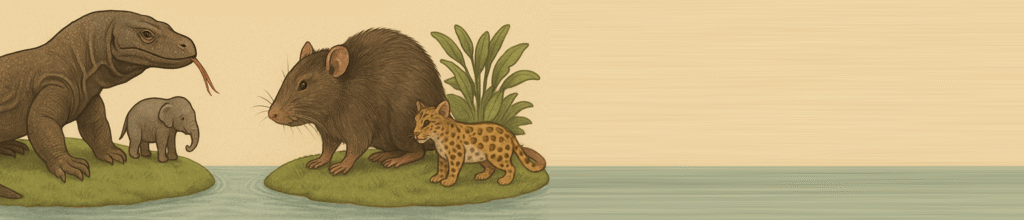
The “Island Rule” is a well-established ecological theory describing predictable patterns in body size evolution among insular species. It proposes that small-bodied species often evolve larger sizes (insular gigantism), whereas large-bodied species tend to become smaller (insular dwarfism) when isolated on islands. These shifts are influenced by various ecological and evolutionary factors, including island size, isolation from the mainland, predation pressure, and resource availability.
Although the Island Rule has been extensively examined in birds, mammals, and reptiles, the general mechanisms driving body size evolution across different animal groups remain incompletely understood. Investigating how these ecological drivers shape morphological adaptation can provide valuable insights into species persistence and adaptive evolution within isolated or fragmented habitats.
Indonesia, with its more than 17,000 islands that differ in size, elevation, and distance from the mainland, offers a natural laboratory to study these processes. The country’s exceptional biodiversity and complex island systems create ideal conditions to test long-standing evolutionary hypotheses about body size variation and the environmental factors influencing it.
Objectives
Examine how island area, isolation, and habitat structure influence body size variation among wildlife species across Indonesian islands.
Assess the ecological and environmental factors contributing to gigantism or dwarfism in insular populations.
By applying the Island Rule across Indonesia’s rich and diverse faunal communities, this project will provide new perspectives on how isolation and environmental pressures drive morphological evolution. The findings will enhance understanding of adaptive strategies that enable wildlife to persist in insular and fragmented ecosystems.
Project Supervisor(s): Dr. Tharusha Wijewardena / Dr. A.A. Thasun
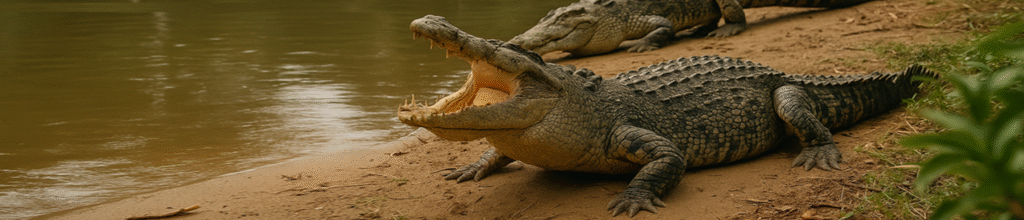
5. Relocation Success and Homing Behaviour of Crocodiles in Indonesia
Human–crocodile conflict is an escalating conservation and public safety issue in Indonesia, with approximately 665 recorded attacks over the past decade—nearly half of which were fatal. These incidents often occur in rural areas where communities rely heavily on rivers, lakes, and estuaries for fishing and daily livelihoods, placing people in close proximity to crocodile habitats. As human populations expand and development intensifies near waterways, the frequency of encounters and conflicts is expected to rise, emphasizing the need for effective and ecologically informed mitigation strategies.
Crocodiles are highly mobile apex predators, capable of extensive movements, especially during the breeding season when individuals travel to nesting or territorial sites. Studies from Costa Rica and Australia have shown that relocated “nuisance” crocodiles can demonstrate exceptional navigational abilities—returning to their original capture locations even from distances exceeding 60 to 400 kilometers. However, relocation success rates remain low and context-dependent, influenced by landscape features, habitat connectivity, and the presence of natural or artificial barriers.
In Indonesia, the ecological and behavioral outcomes of crocodile relocation are largely unstudied. Understanding how relocated individuals respond to new environments, and whether physical barriers effectively prevent homing behavior, is critical for improving human–crocodile coexistence and ensuring both public safety and species conservation.
Objectives
-
Assess home range size, site fidelity, and spatial movement patterns of wild crocodile populations.
-
Evaluate the movement behavior and relocation success of translocated nuisance crocodiles.
This research will provide crucial insights into crocodile spatial ecology and inform evidence-based management strategies for mitigating human–crocodile conflict in Indonesia. By integrating movement ecology with practical conservation planning, the project will help wildlife authorities design more effective relocation protocols and strengthen coexistence between humans and these keystone predators.
Project Supervisor(s): Dr. Tharusha Wijewardena / Dr. A.A. Thasun